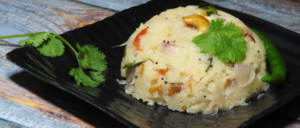
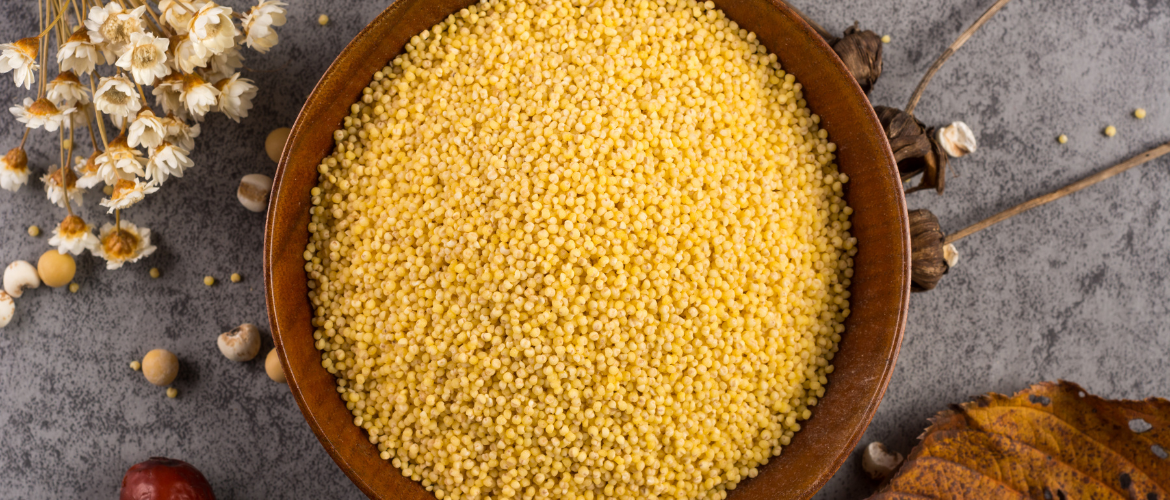
Indian millets are a group of nutritiously rich, drought-tolerant crops mostly grown in the arid and semi-arid regions of India. They are small-seeded grasses belonging to the botanical family Poaceae. These millets are an important source of food and fodder for millions of resource-poor farmers and play a vital role in the ecological and economic security of India. Often referred to as “coarse cereals” or “cereals of the poor,” Indian millets are nutritionally superior to wheat and rice, being rich in protein, vitamins, and minerals. They are also gluten-free and have a low glycemic index, making them ideal for people with celiac disease or diabetes.
India is among the top 5 exporters of millets in the world. World exports of millet increased from $400 million in 2020 to $470 million in 2021 (ITC trade map). India exported millets worth $64.28 million in 2021-22, up from $59.75 million in 2020-21. However, the share of millet-based value-added products remains negligible.
Benefits of Millets
- Millets are highly adaptive to a wide range of ecological conditions, thrive well in rain-fed arid climates, and have minimal requirements for water, fertilizers, and pesticides.
- Compared to other cereals, they have a superior micronutrient profile and bioactive flavonoids.
- Millets have a low Glycaemic Index (GI) and are associated with the prevention of diabetes.
- They are a good source of minerals like iron, zinc, and calcium.
- Millets are gluten-free and can be consumed by people with celiac disease.
- Millets have a beneficial effect on managing and preventing hyperlipidemia and cardiovascular disease (CVD) risk.
- They are found to be helpful in reducing weight, BMI, and high blood pressure.
- In India, millet is generally consumed with legumes, which enhances the overall digestibility of protein.
- Millet-based value-added products in the ready-to-cook and ready-to-eat categories are convenient for the urban population.
- Millets are used for dual purposes, both as food and fodder, making farming more efficient.
- Millet cultivation helps reduce the carbon footprint.
Indian Millet Production Scenario
Millet is a type of grain that is popular in many parts of the world, especially in Africa and Asia. It is a staple food in many parts of the world, particularly in these regions. According to the World Food Programme, an estimated 1.2 billion people consume millet as a part of their diet.
Millet production has remained relatively stable over the past few years, with an estimated production of 28 million metric tons in 2020. The majority of millet is produced in Africa, followed by Asia. India is the largest producer of millet, followed by Niger and China. Other major millet-producing countries include Burkina Faso, Mali, and Senegal. While millet is not a major food crop in the developed world, it plays a vital role in the diets of many people in developing countries. Millet is a drought-tolerant crop that can be grown in dry, arid climates where other crops would fail. It is also a nutritious grain that is high in fiber and essential minerals. For these reasons, millet will continue to be an important food crop in the years to come.
In India, millet production has been on the rise in recent years. Indian farmers have been increasingly planting millet as a drought-resistant crop. The Indian government has also been promoting millet production as part of its National Food Security Mission. As a result, millet production in India is expected to continue growing in the coming years.

Indian Millet Sourcing Points
India is one of the leading producers and suppliers of millet, and there are several millet sourcing points located throughout the country. The main millet-growing states in India are Rajasthan, Maharashtra, Karnataka, Andhra Pradesh, and Madhya Pradesh. These states have a large number of millet farmers who grow the grain for both domestic and international markets. Additionally, there are several smaller millet-producing regions in states like Uttar Pradesh, Bihar, and Madhya Pradesh.
Know Your Millets
| Millet | Botanical Name | Common Name |
|---|---|---|
| Pearl Millet | Pennisetum glaucum .L. | Bajra |
| Sorghum Millet | Sorghum bicolor | Jowar |
| Finger Millet | Eleusine coracana | Ragi/Nagli |
| Foxtail Millet | Setaria italica | Kangani/thenai |
| Barnyard Millet | Echinochloa frumentacea | Sanva/sama |
| Kodo Millet | Paspalum scrobiculatum | Kodra/varagu |
| Proso Millet | Panicum miliaceum L. | Chena/Baree |
| Little Millet | Panicum sumatrense | Varai/kutki |
| Browntop Millet | Brachiaria ramosa | Hari Kangani |
| Buckwheat Millet | Fagopyrum esculentum | Kuttu |
| Amaranth | Amaranthus species | Rajgira |
Why Millets are Called Superfood
Millets are often referred to as “Superfood” or “Nutri-Cereals” due to their high nutritional content. They are loaded with fiber, vitamins, minerals, and proteins while being low in fat and sugar and free from cholesterol. This makes them ideal for people with diabetes and heart issues.
Health Benefits of Millets
- Anti-acidic
- Gluten-free
- Detoxifies the body
- Niacin (vitamin B3) can help lower cholesterol
- Prevents breast cancer
- Helps prevent type 2 diabetes
- Effective in reducing blood pressure
- Protects against heart diseases
- Aids in treating respiratory conditions such as asthma
- Optimizes kidney, liver, and immune system health
- Reduces risk of gastrointestinal conditions like gastric ulcers or colon cancer
- Eliminates problems like constipation, excess gas, bloating, and cramping
- Acts as a prebiotic feeding microflora in your inner ecosystem
Amaranth (Rajgira)
A pseudo-cereal with iron content higher than other grains. Excellent for anemia, skin problems such as acne and eczema, liver function, and during menstruation.